

Understand your building. Know what matters.
Explore your building, its equipment and the local conditions that may affect its care.
Free to use. No account needed.
Three things you can do

Check your building
See what you know about your building, what is missing and what deserves a closer look.
- What each answer rests on
- What is still unknown
- What to review next

Explore local conditions
See the weather records for your area, and what those conditions may mean for a building.
- Long-run readings from named stations
- Official weather alerts, as issued
- What each condition may touch

Understand your equipment
Read what a rating plate tells you, and check official recall notices for the equipment you have.
- What a rating plate says
- Official recall notices
- Plain guides to common systems
What a Condition Profile shows
One dated record for one building. Here is the sample profile at a glance. It uses example data, not a real building.
- systems described
- 5
- backed by a reported record
- 2
- best-known answers, from memory
- 3
- with important information missing
- 2
- suggested next steps
- 5
Installed 2016 · Supporting record reported
Installed 2019 · Best-known answer
Installation date not recorded · Unknown
A suggested next stepLocate the installation invoice for the cooling system.
- Supporting record reportedYou told us a document exists. ICI does not receive or verify documents.
- Best-known answerYour best recollection, recorded as exactly that.
- UnknownNot answered. A gap in the record, never a fault in the building.
What local conditions may mean for buildings near you
Enter a postal area or ZIP code to see long-run readings from the nearest qualifying stations, and the parts of a building they may affect.
The first three characters of a Canadian postal code, or a five-digit United States ZIP. ICI uses the location information submitted here to provide local context and may retain submitted information to operate and improve the service. See our Privacy Policy for details.

Calgary (Airport) station
The nearest qualifying station. Climate normals 1991–2020, Environment and Climate Change Canada.
- Heating degree days below 18 °C
- 4,994a year
- Days below −20 °C
- 21.6a year
- Snowfall
- 139 cma year
- Days above 30 °C
- 4.8a year
A 30-year average at a station, not a reading at any building and not a forecast.
Example: Calgary, Alberta, postal area T2P
What these readings may touch
Heating and backup heatLong, cold winters drive heating demand and raise the stakes for water lines in unheated spaces.- Roof drainage and clearancesSnowfall bears on roof drainage, ice damming and clearance around outdoor equipment.
- Cooling and interior heatHot days are few here, but they still shape cooling needs and indoor temperatures.
The conditions around a building
Cold, heat, rain, snow and smoke all act on a building. For each, what it may touch and what is worth checking.
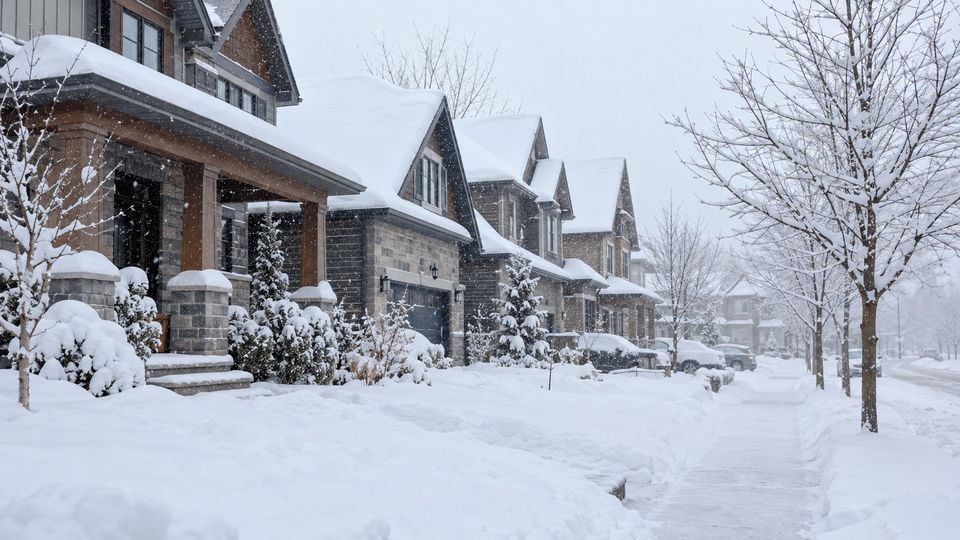
Extreme cold
- What it may touch
- Heating, plumbing and exterior walls
Cold readings in the AlmanacWhat to check
- What to check
- Where water lines run through unheated spaces, and whether there is a backup heat source.
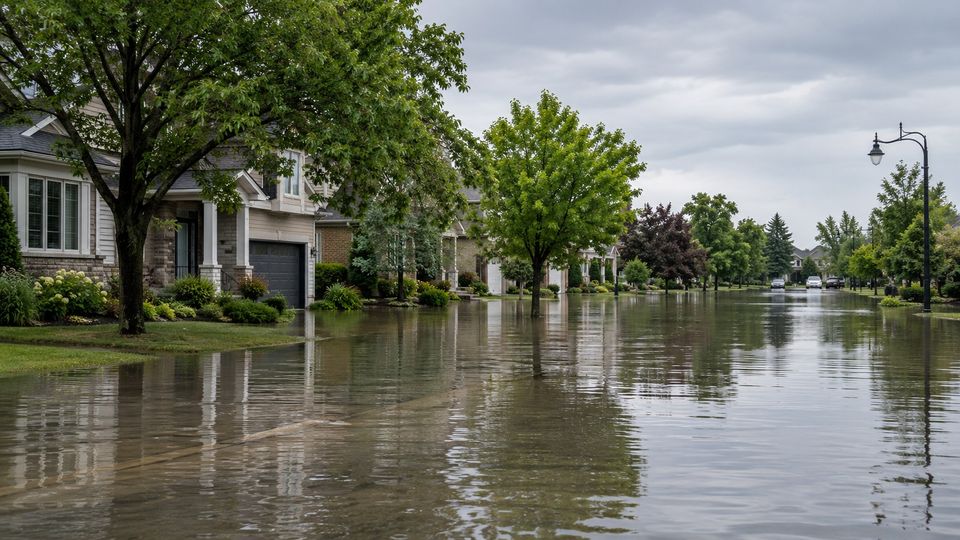
Heavy rain
- What it may touch
- Roof drainage, the sump pump and below-grade spaces
Rainfall readings in the AlmanacWhat to check
- What to check
- From a safe spot, that visible drains are clear, and when the sump pump was last tested.
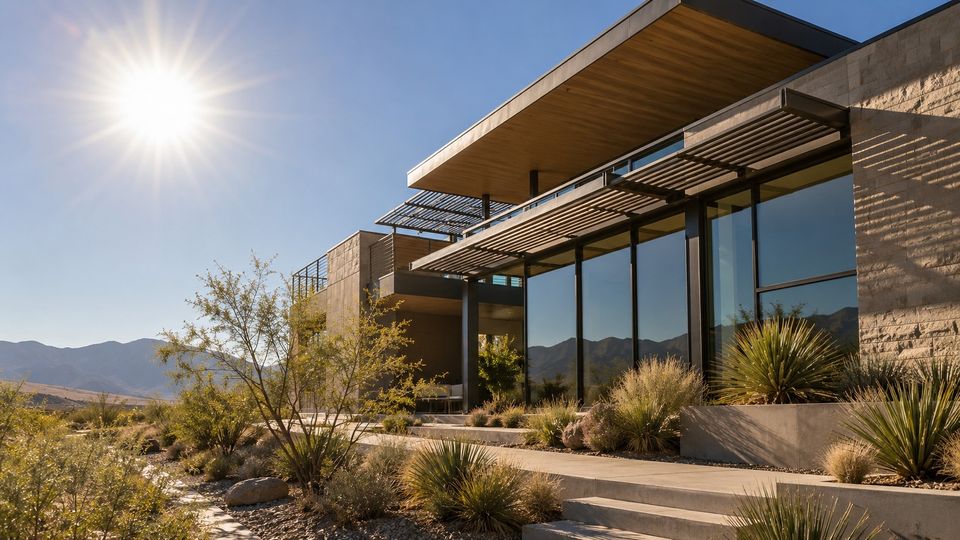
Extreme heat
- What it may touch
- Cooling equipment, shading and the electrical supply during outages
Weather and cost driversWhat the sources say
- What the sources say
- Hotter conditions can increase the cooling a building needs. Actual use depends on the envelope and how the building is run.
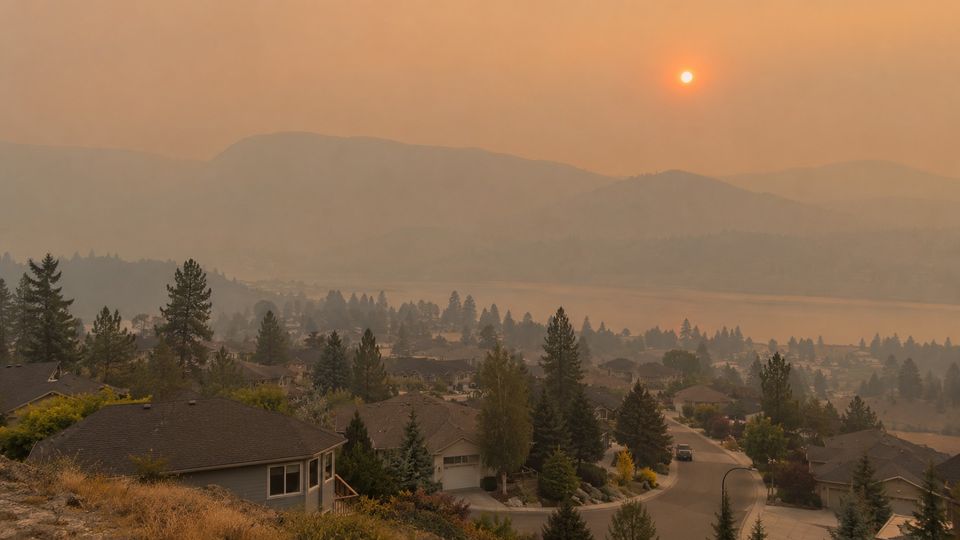
Wildfire smoke
- What it may touch
- Heating and cooling filtration, and ventilation
The seasonal calendarWhat the sources say
- What the sources say
- Health Canada notes that smoke particles can quickly overload filters.
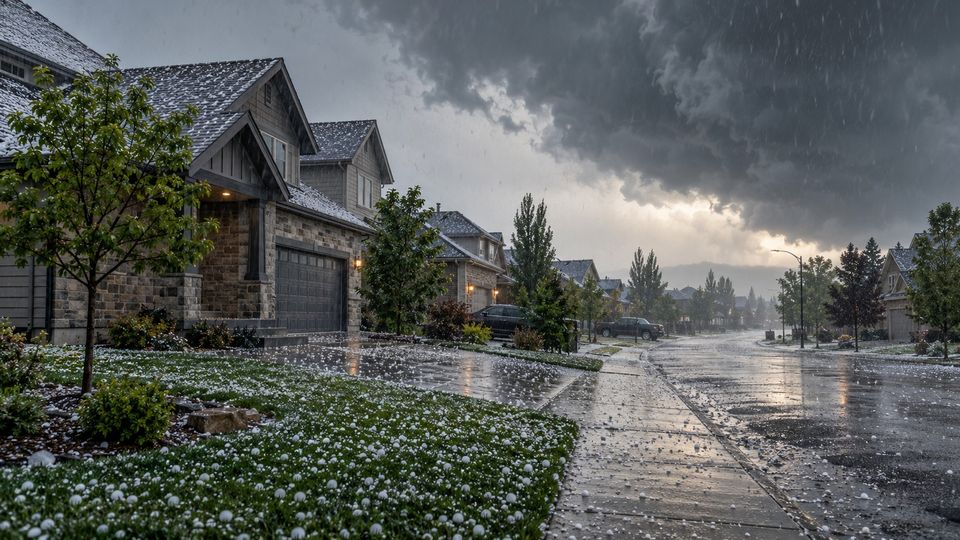
Hail
- What it may touch
- Roof covering, siding and outdoor equipment
Weather and cost driversWhat the sources say
- What the sources say
- Large hail can pit and fracture asphalt shingles, as reported by the Institute for Catastrophic Loss Reduction.
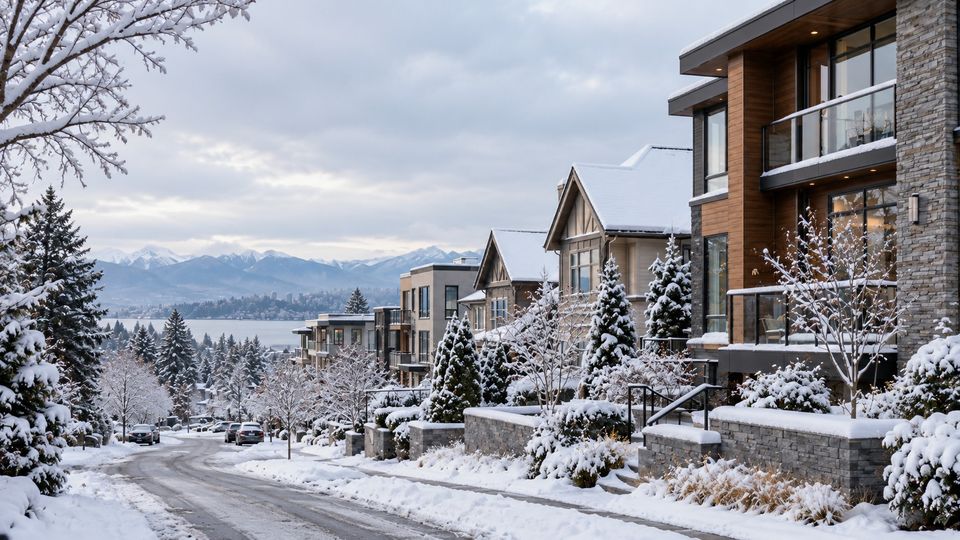
Freeze-thaw
- What it may touch
- Sealants, flashings, masonry and foundations
Freeze-thaw readings in the AlmanacWhat to watch
- What to watch
- Photograph and date them from the ground, and note where water sits against the building.


Photographs illustrate each condition. They do not show a particular building or event.
Why you can rely on what ICI shows
ICI is a public information service. It exists to make building and climate information easier to find and understand, and to be plain about its limits.
Every figure names its source
Local readings carry their station, period and publisher. Equipment and recall details carry the agency that published them.
Gaps stay gaps
What nobody knows is listed as unknown. A missing answer or record is never counted against a building, and a missing reading is never filled in.
It is not an inspection
ICI records what you know and what public sources say. Where something needs a professional, it says so instead of guessing.

Start with one building.
A few minutes, and a dated Condition Profile you can keep or print. Free to use. You choose whether to save a profile.